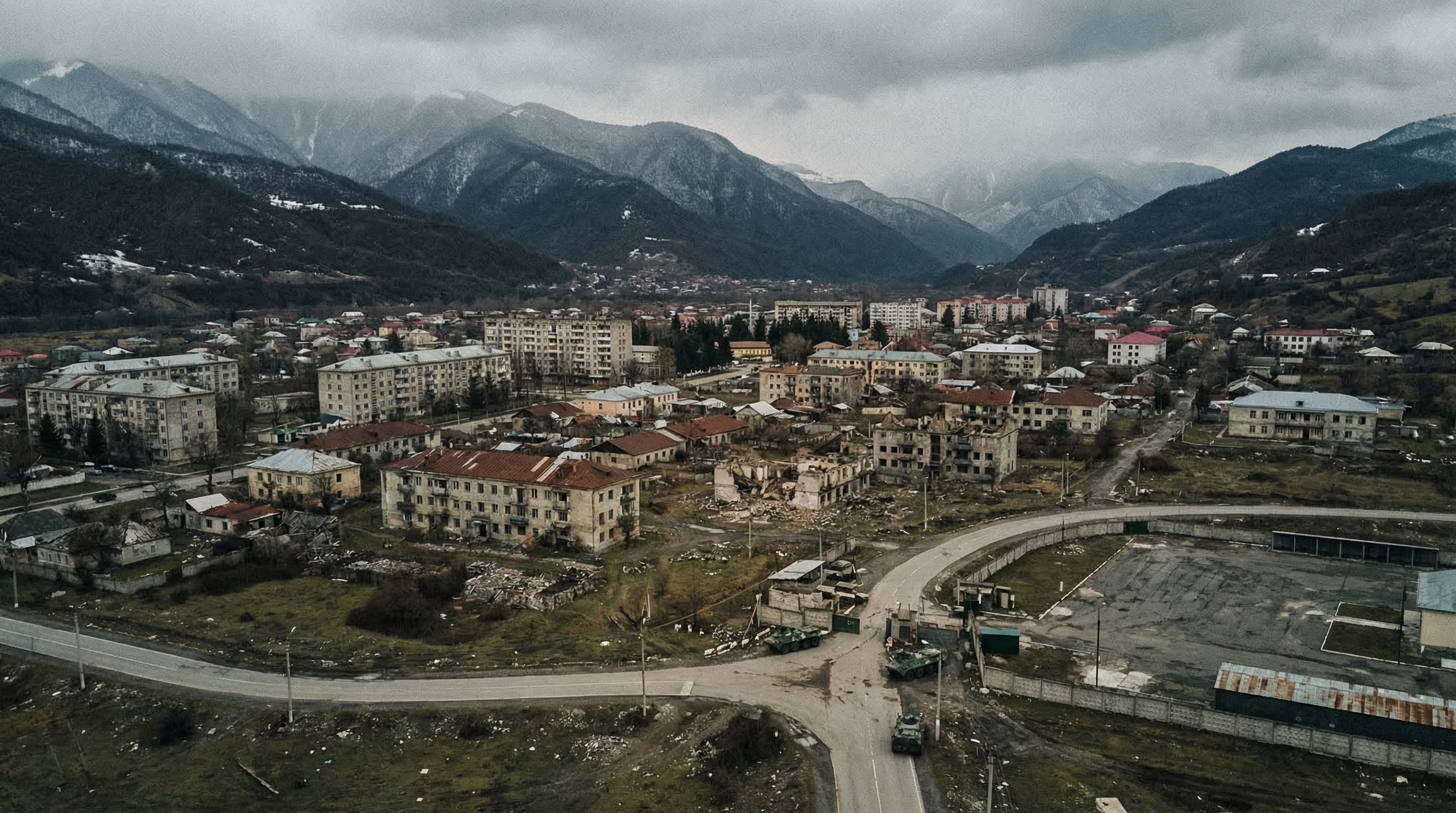
South Ossetia
South Ossetia declared independence from Georgia in 1990. Following the 2008 Russo-Georgian War, Russia recognised South Ossetia as independent. The territory is heavily dependent on Russia and has been largely depopulated. Unlike Abkhazia, South Ossetia has no viable independent economy and is effectively a Russian military outpost on Georgian territory, with a population that has declined dramatically since 2008.
Key Fact
South Ossetia's pre-war population of ~70,000 has been reduced to an estimated 30,000–50,000 following the 2008 war and subsequent emigration. Russia has effectively annexed the territory in practice. South Ossetia has no independent economy: it is entirely funded by Russian budget transfers.
Historical Timeline
| Period | Ruling Authority | Notes |
|---|---|---|
| 1921–1991 | Soviet period | South Ossetia as autonomous oblast within Soviet Georgia; Ossetian identity distinct from Georgian; periodic tensions; Ossetian language and culture maintained |
| 1989–1991 | Independence movements | Georgian independence movement; South Ossetian counter-movement; Georgian parliament abolishes South Ossetian autonomous status 1990; violence begins; ~1,000 killed; Georgian and Ossetian villages ethnically separated |
| 1991–1992 | First war | South Ossetian forces backed by Russian irregular troops; Georgian forces expelled from most of South Ossetia; ceasefire June 1992; Joint Control Commission (Georgia, Russia, South Ossetia, North Ossetia) established |
| 1992–2008 | First freeze | Russian peacekeeping force; periodic incidents; Georgian internally displaced persons; South Ossetia develops grey economy; Mikheil Saakashvili elected 2004; Georgian military build-up |
| August 2008 | Russo-Georgian War | Georgian military offensive against Tskhinvali August 7-8; Russian military counteroffensive August 8; Russian forces advance into Georgia proper; ceasefire August 12; Russia recognises South Ossetia and Abkhazia August 26 |
| 2008–present | Russian protectorate | EU Monitoring Mission deployed to Georgia (not South Ossetia); Russian military bases; borderisation (barbed wire fences advancing into Georgian territory); population decline; South Ossetia increasingly integrated into Russia |
Foreign Policy Analysis
Three-level analysis: systemic, state, and individual factors
Systemic Level
South Ossetia is the clearest example of a Russian-manufactured frozen conflict. Unlike Abkhazia, South Ossetia has no viable independent existence: it has no economy, a declining population, and no international recognition beyond Russia's small circle of allies. Russia's strategic interest is identical to Abkhazia: preventing Georgia's NATO membership by maintaining territorial disputes. The 2008 war was triggered by a Georgian military miscalculation (Saakashvili's decision to attack Tskhinvali) but the underlying conditions were created by Russian policy. The EU's Tagliavini Report (2009) found that Georgia started the military phase of the conflict but that Russia's response exceeded what was necessary for self-defence.
State Level
Georgia's position is that South Ossetia is occupied Georgian territory. The de facto South Ossetian government's position is that independence is irreversible. Russia's position is that South Ossetia exercised its right to self-determination. Note: The EU's independent Tagliavini Report (2009) is the most credible source on the 2008 war's origins; it found fault on all sides. Georgian, Russian, and South Ossetian sources all present self-serving accounts of the 2008 events.
Individual Level
The South Ossetian population (~30,000–50,000) is predominantly Ossetian with a small Georgian minority. Many ethnic Georgians were displaced in 1991–92 and 2008. The population has been declining due to emigration to Russia. The de facto government is entirely dependent on Russian political support and financial transfers.
Policy Paths
Three documented approaches to resolution — with their consequences
Autonomy within Georgia
Georgia's offer: South Ossetia as an autonomous region within Georgia with self-governance rights.
Consequences
Rejected by the de facto government and Russia. Requires Russian military withdrawal, which Russia has refused. Georgia's EU accession process could make this more attractive.
Examples
South Tyrol (1992): genuine autonomy within Italy. Aceh, Indonesia (2005).
Russian Annexation
Russia formally annexes South Ossetia, potentially merging it with North Ossetia (a Russian federal subject).
Consequences
South Ossetia's population has repeatedly expressed interest in unification with North Ossetia. Russia has resisted formal annexation to avoid international consequences. The 2022 Ukraine invasion has changed Russia's calculus on annexation.
Examples
Crimea (2014): Russian annexation following years of frozen status.
EU-Mediated Settlement
A settlement as part of Georgia's EU accession process.
Consequences
Requires Russian agreement. The EU has no presence in South Ossetia. Less viable than for Abkhazia given South Ossetia's smaller population and greater Russian integration.
Examples
Moldova/Transnistria: EU accession incentive is reshaping the conflict's dynamics.
Continued Freeze / Creeping Annexation
Russia continues borderisation and integration without formal annexation, gradually absorbing South Ossetia into Russia.
Consequences
The current trajectory. South Ossetia's population is declining; its institutions are Russian-funded; its military is Russian. Formal annexation may be unnecessary if de facto integration continues.
Examples
Crimea before 2014: de facto Russian influence before formal annexation.
Conditional Equilibrium
South Ossetia's frozen status is even more dependent on Russian will than Abkhazia. Without Russian military presence and financial support, the territory would be ungovernable. The equilibrium is entirely Russian-maintained and will change only if Russian strategic priorities change.
Escalation Risk
Probability assessment and specific trigger conditions for conflict escalation
The risk of renewed armed conflict is low given Russian military presence. The primary risk is Russian formal annexation, which would trigger EU and US sanctions but is unlikely to produce armed conflict.
Russian formal annexation
low probabilityRussia could formally annex South Ossetia, potentially merging it with North Ossetia. The South Ossetian population has expressed interest in this. Russia has resisted to avoid international consequences.
Historical Analogue
Crimea 2014: formal annexation of a Russian-backed territory. South Ossetia is structurally similar but smaller and less strategically significant.
Sources & Further Reading
Key academic works, primary documents, and institutional reports cited in this analysis. Sources are drawn from multiple national and institutional perspectives; where sources conflict, the divergence is noted.
As an Amazon Associate, frozenconflicts.org earns from qualifying purchases. Book links support the site at no extra cost to you.
Report of the Independent International Fact-Finding Mission on the Conflict in Georgia
Independent International Fact-Finding Mission on the Conflict in Georgia (Tagliavini Report) · 2009
The most authoritative independent analysis of the 2008 war; commissioned by the EU; found fault on all sides
Small Nations and Great Powers: A Study of Ethnopolitical Conflict in the Caucasus
Cornell, S. · 2001
Covers the origins of the South Ossetian conflict
Find on AmazonSouth Ossetia: The Burden of Recognition
International Crisis Group · 2010
Post-2008 analysis of South Ossetia's situation